


Description
Collectible Russian Mosin Nagant 7.62×54
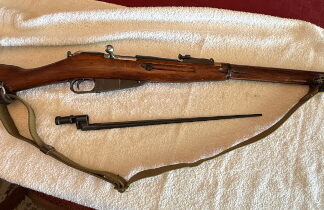
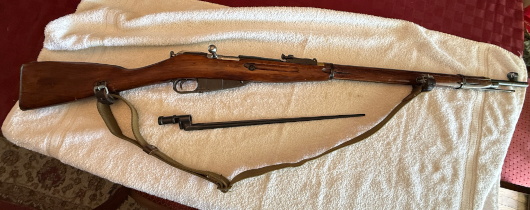
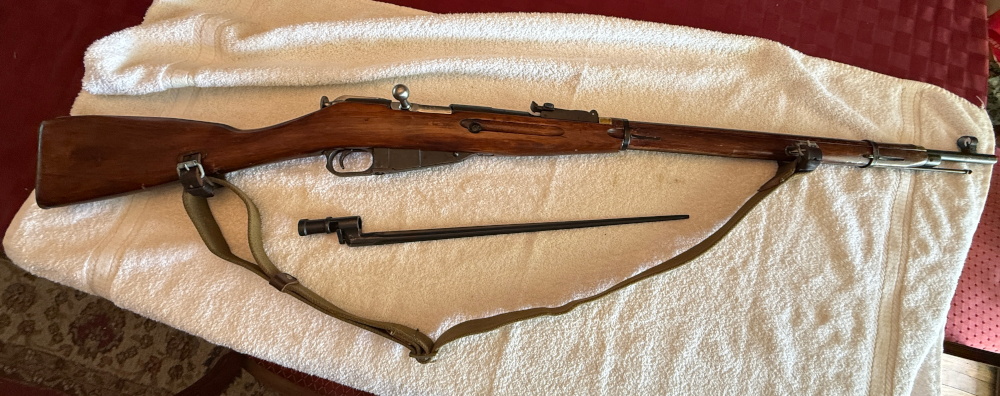
The Mosin-Nagant Model 91/30 rifle, manufactured in 1943 during the height of World War II, is one of the most recognizable infantry weapons fielded by the Soviet Union. Built under extreme wartime production demands, this rifle reflects a focus on durability, simplicity, and mass manufacturability rather than refinement.
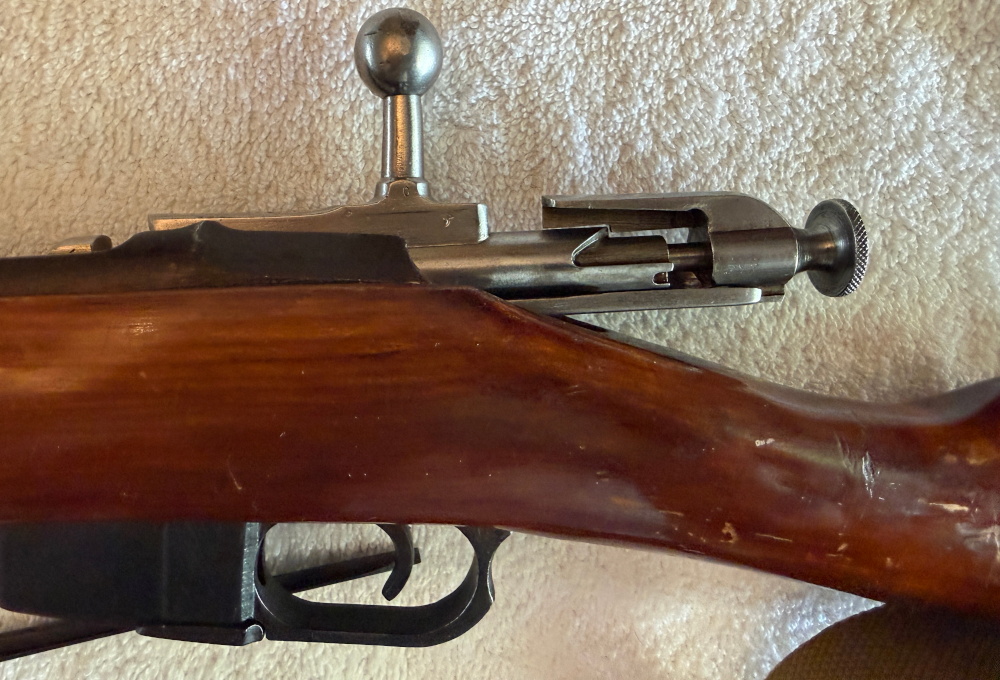
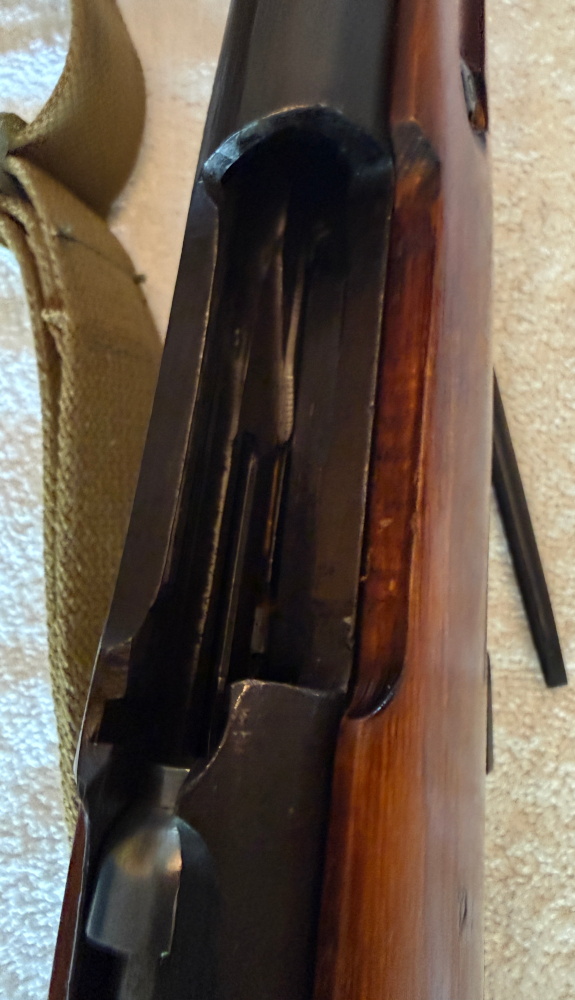
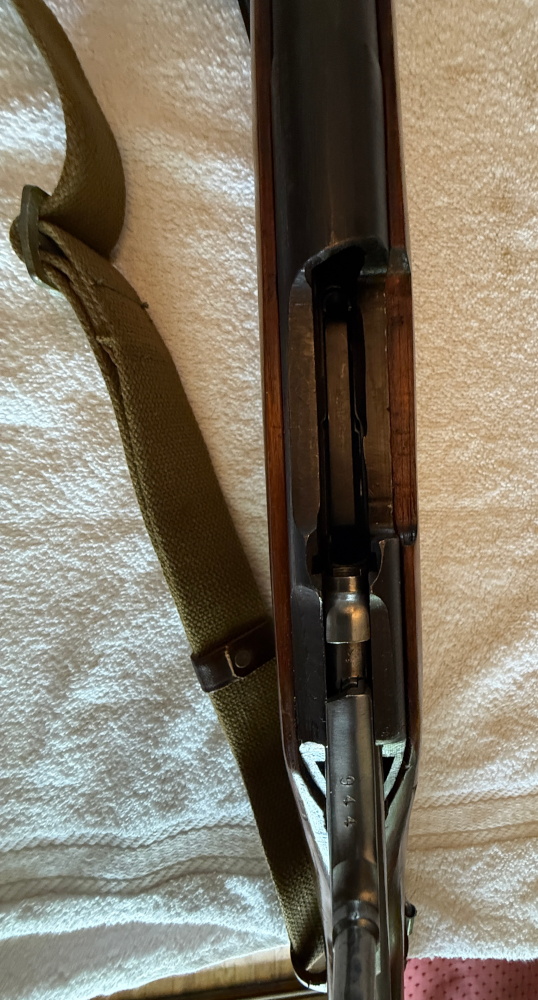
Chambered in 7.62×54mmR, one of the longest-serving military cartridges in history, the rifle uses a manually operated bolt-action system with a fixed five-round internal magazine loaded via stripper clips. The action is famously robust, designed to function reliably in harsh Eastern Front conditions including mud, snow, and freezing temperatures. While the bolt mechanism is not particularly smooth compared to Western counterparts, it is known for its strength and ability to continue functioning even when heavily fouled.
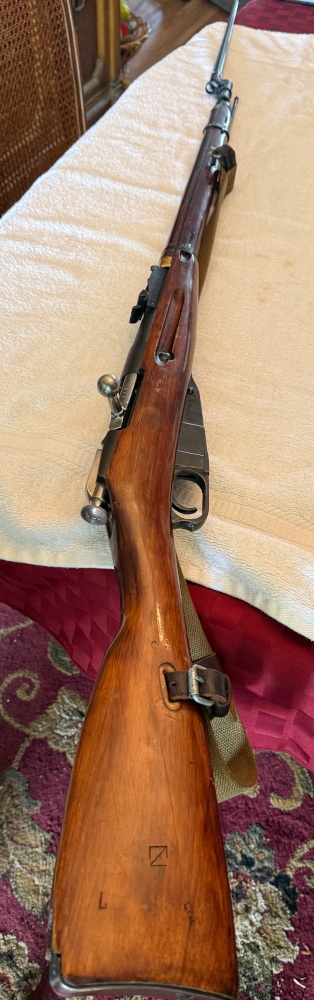
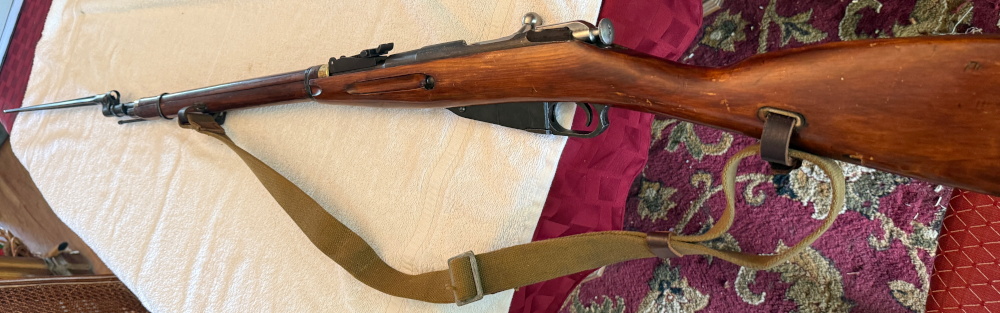
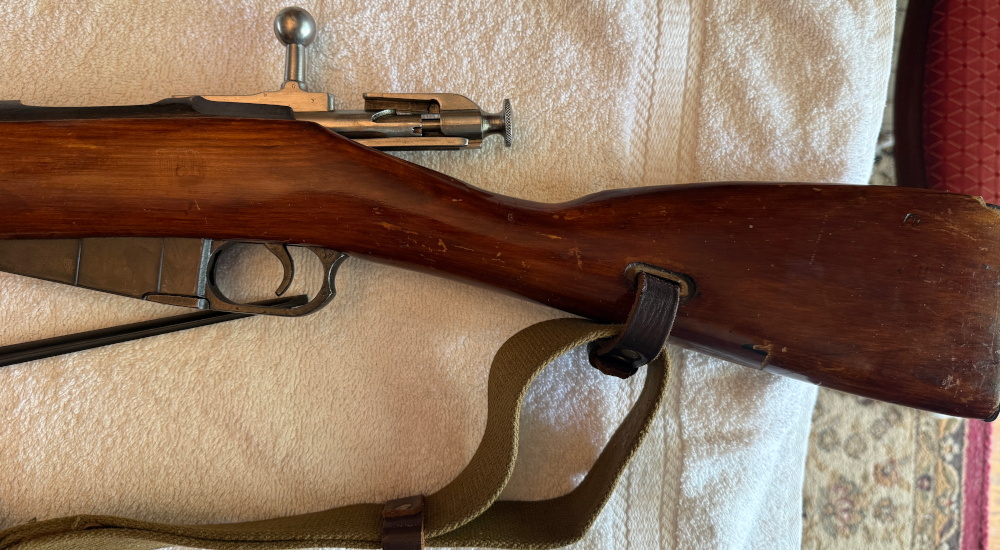
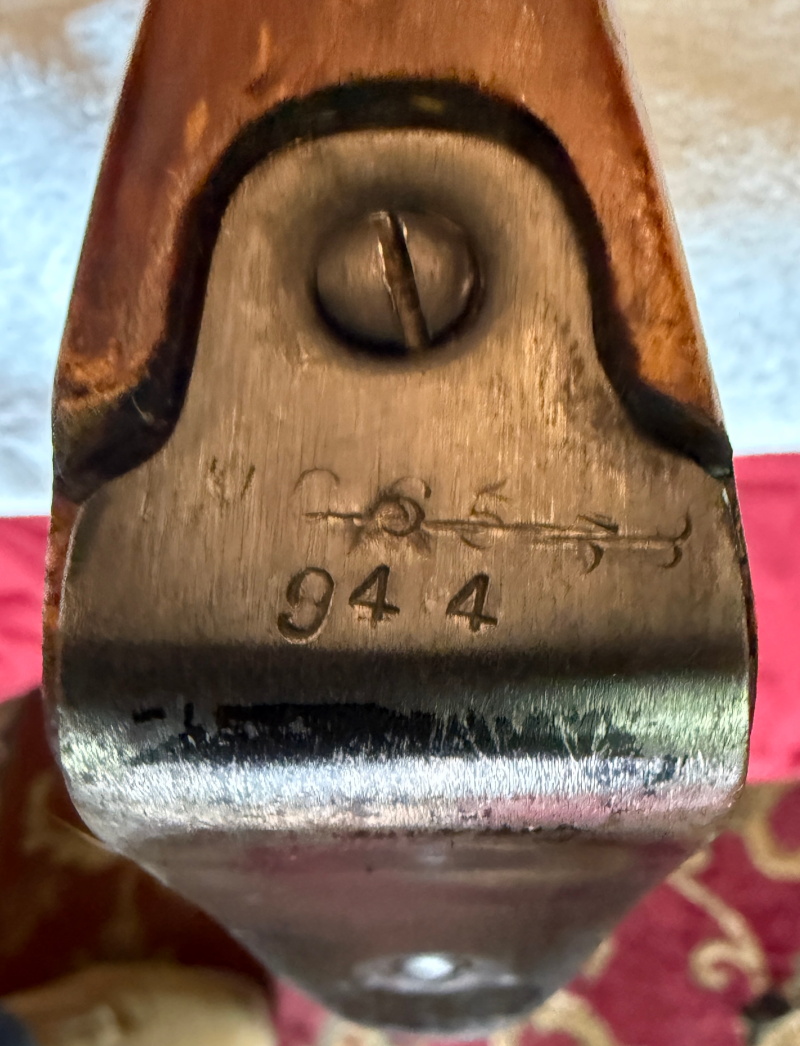
The 1943 production rifles typically feature wartime machining simplifications due to material shortages and accelerated output requirements. This can include rougher metal finishing, fewer cosmetic refinements, and occasionally mismatched or simplified stock components. The stock is generally made of hardwood, often birch or pine, with a long full-length handguard and a steel butt plate. Many wartime examples show visible arsenal repairs or refurbishment marks, reflecting heavy field use and post-service maintenance cycles.
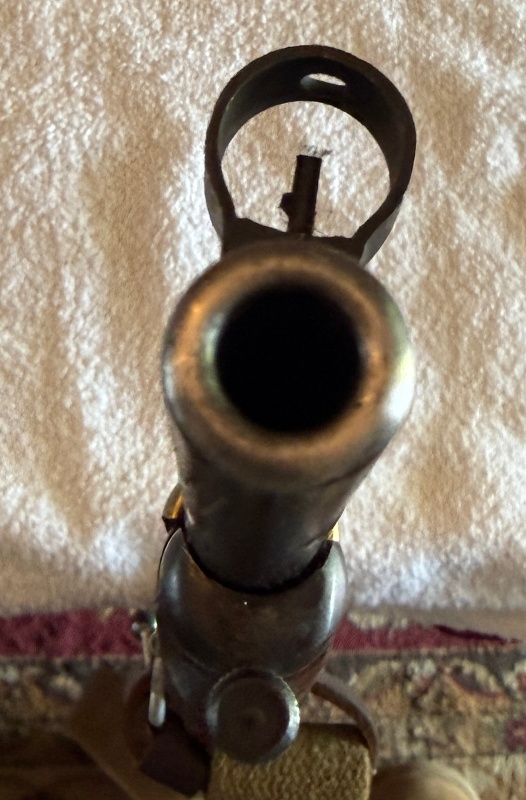
Iron sights consist of a rear adjustable tangent sight and a fixed front post, calibrated in meters. These sights were designed for battlefield engagement at extended ranges, consistent with Soviet infantry doctrine of the era. The long 29-inch barrel contributes to stable bullet velocity and effective range, making the rifle capable of accurate fire well beyond typical infantry distances when properly used.
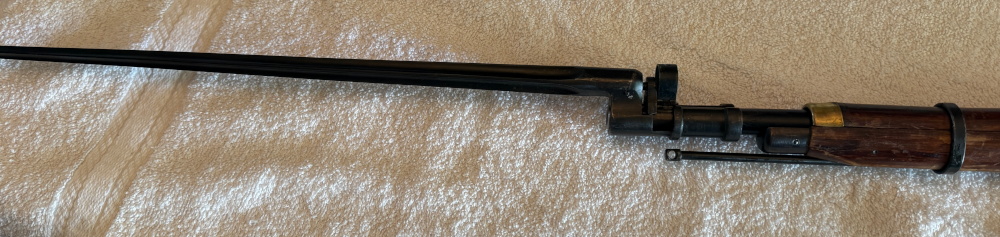
Included with many wartime configurations is the distinctive cruciform spike bayonet. This fixed-blade bayonet mounts directly under the barrel via a lug and locking collar system. Unlike knife-style bayonets, the spike design was intended for durability, ease of production, and effectiveness in close combat without requiring sharpening. When attached, it adds significant length and weight to the rifle, reinforcing its role as a close-quarters infantry tool as well as a ranged weapon.
The Mosin-Nagant 91/30 from 1943 also carries historical significance as a weapon that saw widespread use across major battles of the Eastern Front, including defensive and offensive operations during pivotal moments of the war. Today, it is highly regarded by collectors and historians for its direct connection to WWII combat history and its representation of Soviet wartime industrial capability under extreme pressure.