Description
Smith & Wesson .357 Magnum Stainless Revolver – 4-Inch Barrel with Black Leather Holster
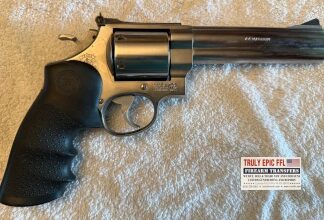
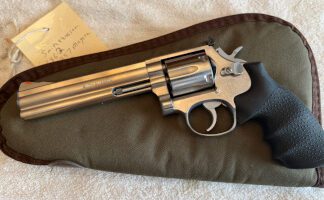
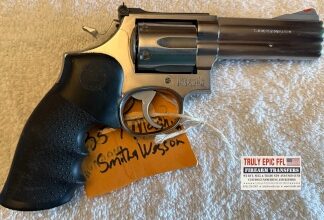
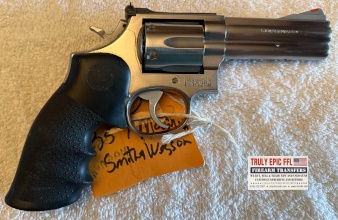
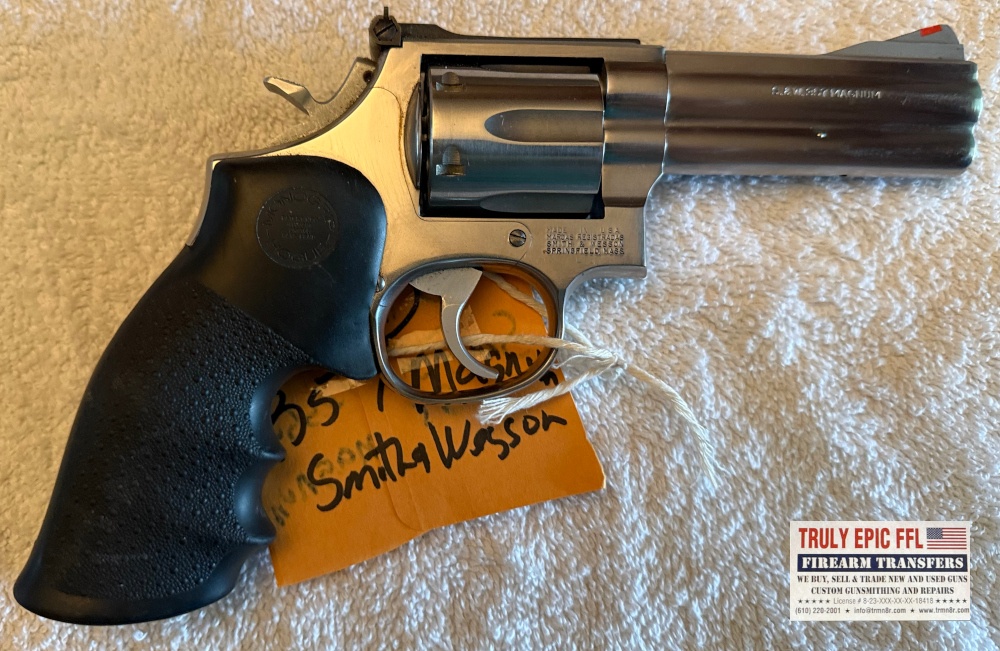
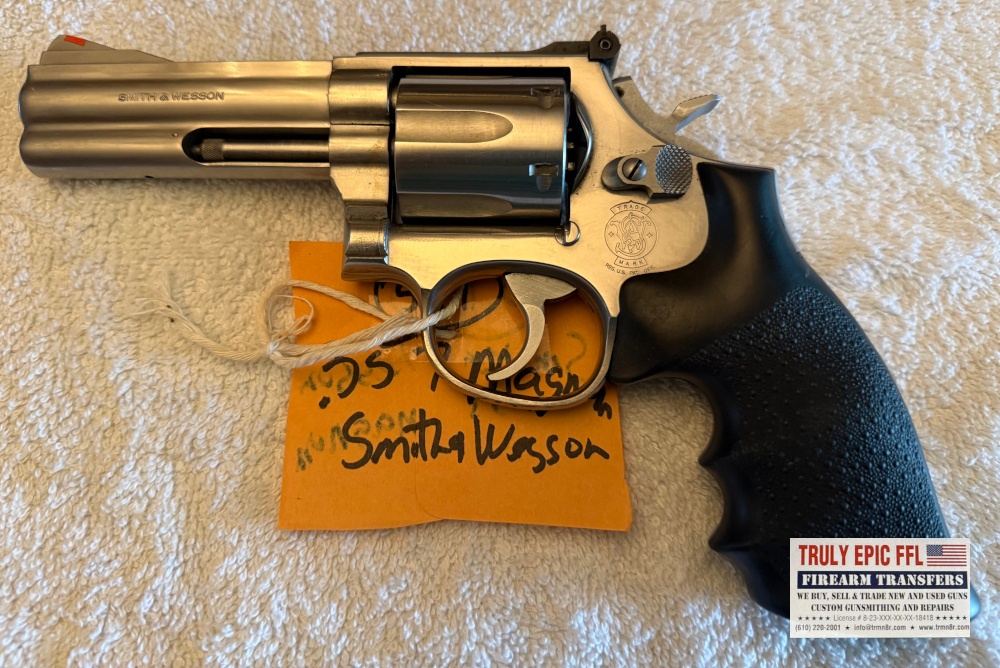
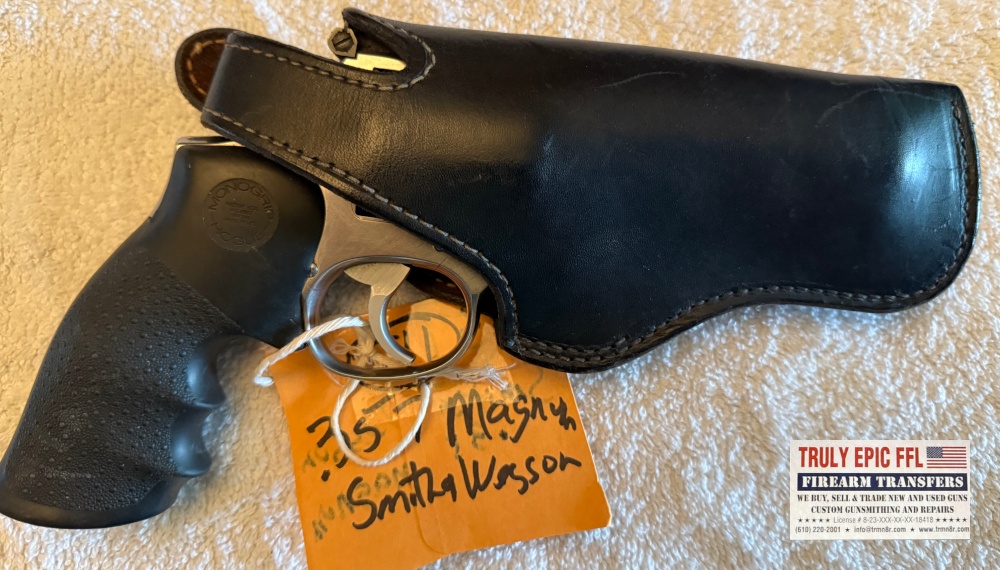
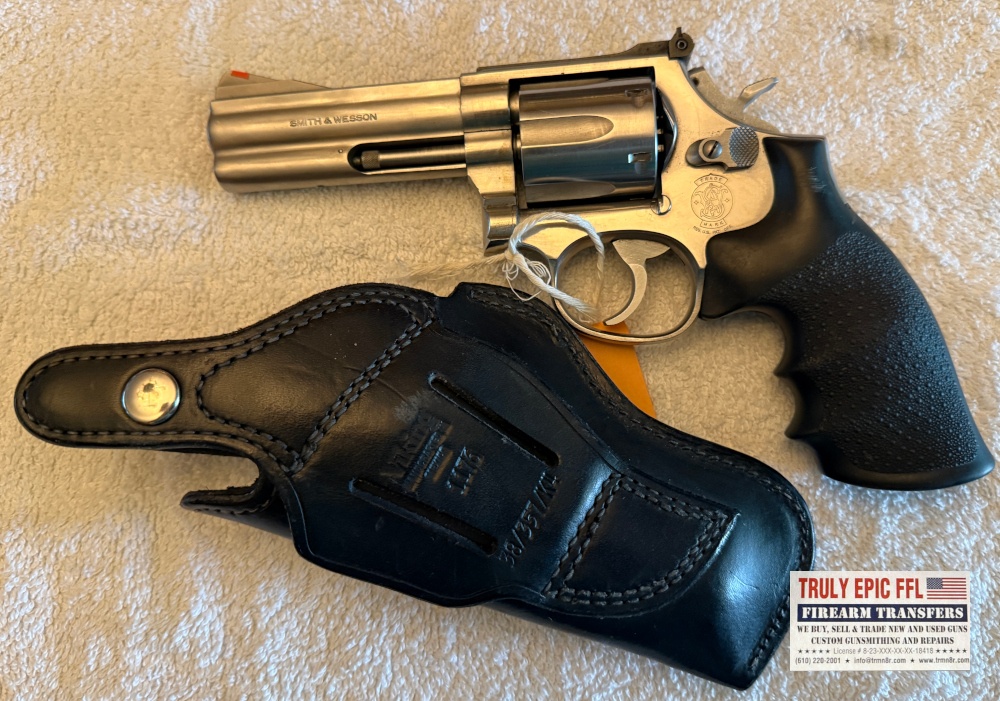
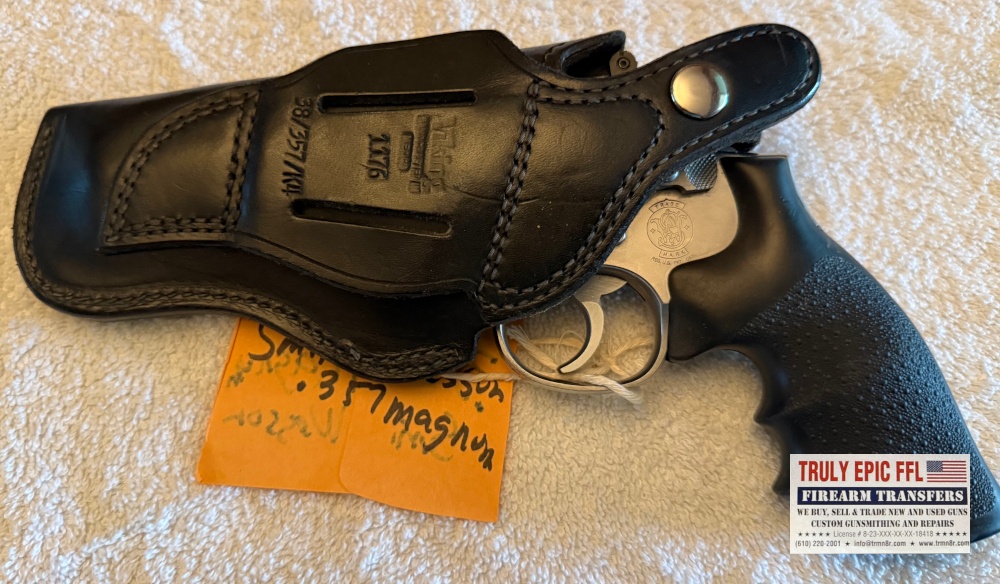
This Smith & Wesson .357 Magnum features a 4-inch barrel and stainless-steel construction, along with a classic revolver design that has remained an important part of American firearms history for generations. A black leather holster is included with the firearm.
The .357 Magnum has a particularly significant history with Smith & Wesson. The company introduced its first revolver chambered for the cartridge in 1935, beginning a long association between the manufacturer and one of the most recognizable magnum cartridges ever developed. The original .357 Magnum was a premium, large-frame revolver, and the design evolved considerably over the decades as Smith & Wesson introduced additional frame sizes and configurations.
The 4-inch barrel is one of the most familiar configurations found on Smith & Wesson .357 Magnum revolvers. This length provides the traditional proportions associated with a full-size service revolver while keeping the overall firearm more compact than longer-barreled sporting and target versions. Four-inch examples have been produced in several different models and frame sizes over the years, making the exact model designation and production period important when documenting an individual firearm.
Stainless-steel construction gives this example a distinctive appearance and provides an alternative to the blued finishes commonly associated with older Smith & Wesson revolvers. The company introduced stainless-steel revolvers during the 1960s, with the Model 60 becoming the first production revolver manufactured from stainless steel. Stainless construction was subsequently incorporated into larger revolver designs, including the Model 66 and later Model 686.
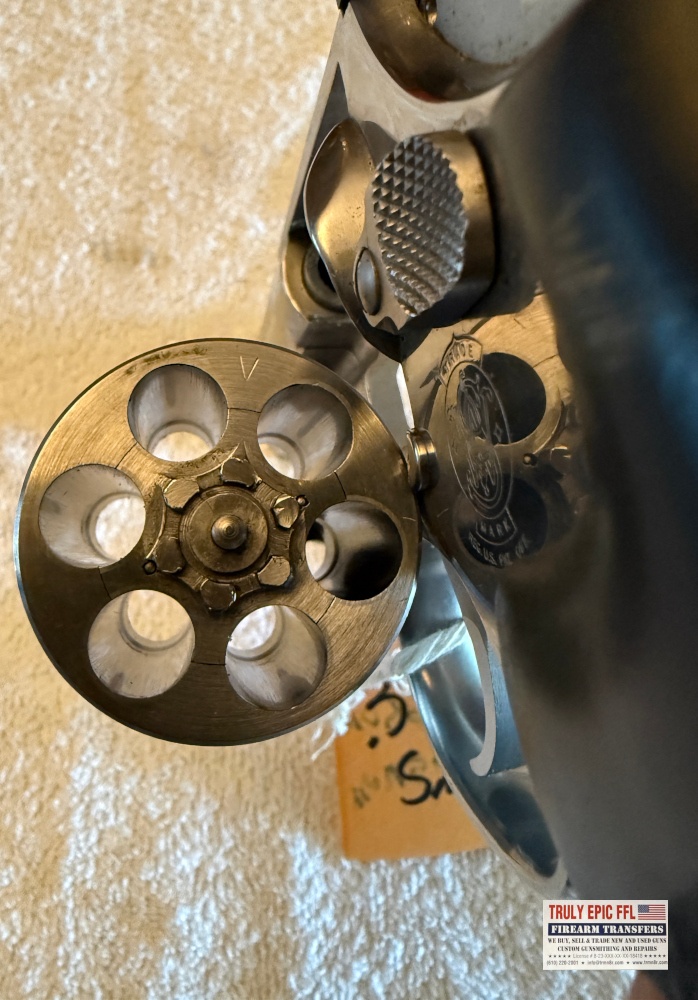
The revolver format offers a straightforward mechanical design centered around a rotating cylinder. Depending on the specific model, Smith & Wesson double-action revolvers can be fired by either a traditional double-action trigger pull or by manually cocking the hammer for single-action operation. The cylinder provides individual chambers for the cartridges, with the exact capacity depending upon the particular frame and model.
The .357 Magnum chambering also provides considerable versatility in appropriately specified firearms. Revolvers chambered for this cartridge can generally accommodate .38 Special ammunition as well, although ammunition should always be selected according to the markings and specifications of the individual firearm. The .357 Magnum’s development grew from efforts to provide greater performance than the .38 Special, and the cartridge quickly became associated with law enforcement and sporting use.
The stainless finish, 4-inch barrel, and traditional revolver configuration give this firearm a classic appearance. The included black leather holster complements that traditional character and provides an additional accessory with the firearm. Leather holsters have long been associated with revolvers, and examples range from simple belt designs to more elaborate fitted leather rigs. The condition and manufacturer of the included holster can be documented separately from the firearm.
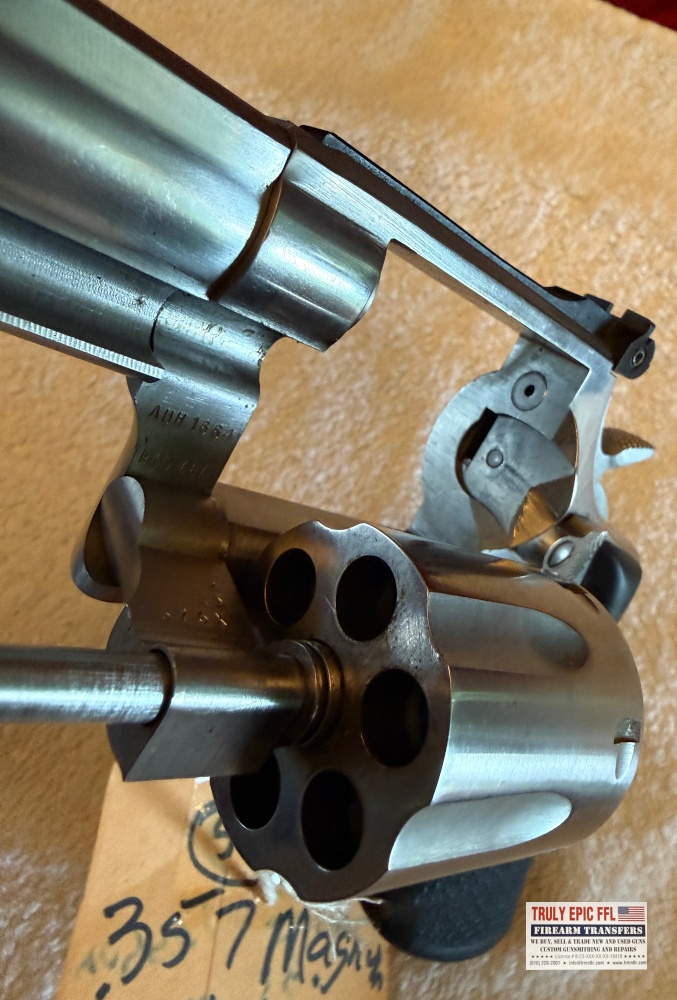
For anyone researching the history of Smith & Wesson revolvers, the exact markings are particularly useful. Model numbers, dash numbers, serial-number prefixes, barrel markings, grips, sights, and other details can help establish the approximate production period and identify the particular configuration. This is especially important because Smith & Wesson produced numerous variations that can appear very similar while having different specifications and collector histories.
The company’s .357 Magnum line has included everything from the original large-frame examples to the medium-frame Combat Magnum designs and later stainless-steel L-frame revolvers. The Model 66, for example, was introduced as a stainless-steel counterpart to the Model 19 and became especially well known in its 4-inch configuration. The Model 686 later provided another stainless-steel option on the larger L-frame platform.
This particular example combines the familiar .357 Magnum chambering with a 4-inch barrel and stainless-steel finish, along with a black leather holster. Its appearance reflects the enduring design language of Smith & Wesson’s double-action revolver family and the long history of the .357 Magnum cartridge.
The exact model designation and production details should be confirmed from the markings on the firearm. Those details can provide additional historical information and help distinguish between the many .357 Magnum configurations produced by Smith & Wesson over the years.