
Description
Description
The Smith & Wesson 686-2 is part of the company’s well-known L‑frame revolver series, chambered in .357 Magnumand also capable of firing .38 Special cartridges. Introduced in the 1980s, the 686 line was developed to offer improved durability over the earlier K‑frame .357 revolvers, particularly for sustained use with full-power magnum loads. The “-2” engineering revision, produced in the late 1980s and early 1990s, incorporated internal updates typical of Smith & Wesson’s incremental design improvements during that era.
Built with a stainless steel frame and barrel, the 686-2 is recognized for its balance, strength, and corrosion resistance. It typically features a full underlug barrel, adjustable rear sight, and a smooth double-action/single-action trigger system. The revolver became popular among law enforcement officers, sport shooters, and revolver enthusiasts for its reliability, accuracy, and manageable recoil.
Historical Background
The Smith & Wesson Model 686 was introduced in 1980 as part of the company’s new L‑frame revolver series. During the 1960s and 1970s, many law enforcement agencies issued .357 Magnum revolvers built on Smith & Wesson’s smaller K‑frame (such as the Model 19). While effective and popular, prolonged use of full‑power .357 Magnum ammunition accelerated wear on those lighter frames.
To address durability concerns, Smith & Wesson developed the L‑frame, which was slightly larger and heavier than the K‑frame but not as large as the N‑frame. The goal was to create a revolver that could withstand steady use of magnum loads while maintaining good balance and handling characteristics suitable for duty carry.
The 686 is the stainless steel version of the blued Model 586. Stainless construction made it especially attractive to law enforcement officers and civilian shooters due to improved corrosion resistance and lower maintenance demands.
The “‑2” engineering revision, produced in the late 1980s to early 1990s, represents one of Smith & Wesson’s incremental internal updates. Dash numbers in Smith & Wesson revolvers indicate design changes—often involving internal components, manufacturing methods, or minor mechanical refinements—rather than major external redesigns.
Design Features
Frame & Construction
-
Built on the L‑frame
-
Stainless steel construction (frame, cylinder, and barrel)
-
Designed for durability with repeated .357 Magnum use
-
Heavier top strap and forcing cone area compared to K‑frames
Action
-
Double‑action/single‑action (DA/SA) revolver
-
Smooth double‑action trigger pull
-
Crisp single‑action break
-
Swing‑out cylinder with push‑forward cylinder release latch
Barrel & Balance
-
Common barrel lengths: 4″, 6″, and sometimes shorter or longer variants
-
Full underlug barrel, adding forward weight
-
Improved recoil control and balance
Sights
-
Adjustable rear sight
-
Replaceable front sight (typically a ramp or red insert)
-
Designed for precision target shooting and duty accuracy
Capacity
-
Traditionally 6 rounds in .357 Magnum
-
Also safely chambers and fires .38 Special cartridges, offering versatility
Legacy & Reputation
The Model 686 quickly earned a strong reputation for:
-
Reliability
-
Strength under magnum use
-
Accuracy
-
Smooth trigger characteristics
It became widely used by law enforcement during the final decades before the widespread transition to semi‑automatic pistols. Today, the 686 series remains popular among sport shooters, revolver enthusiasts, and collectors who appreciate classic American double‑action revolver design.
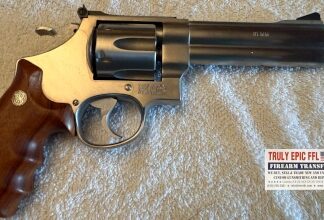
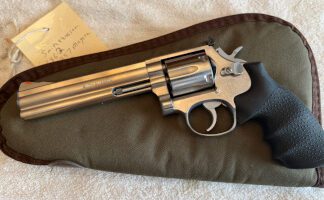
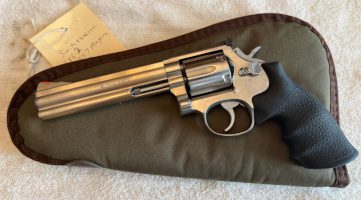
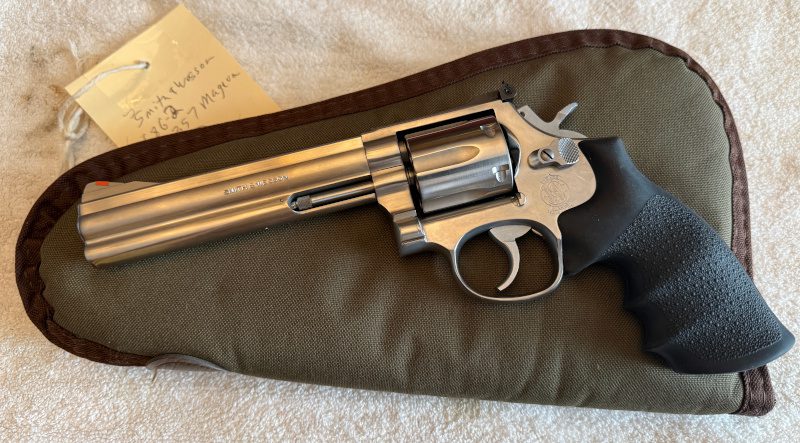
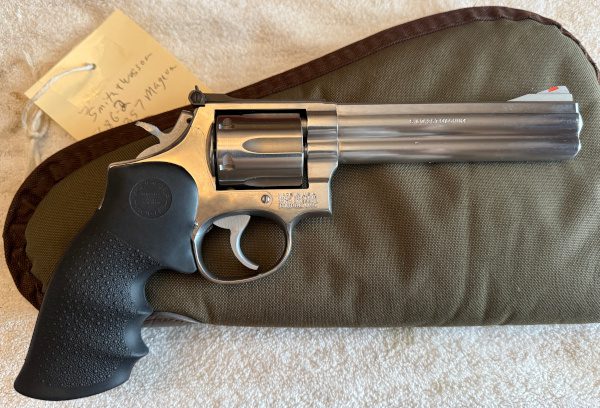
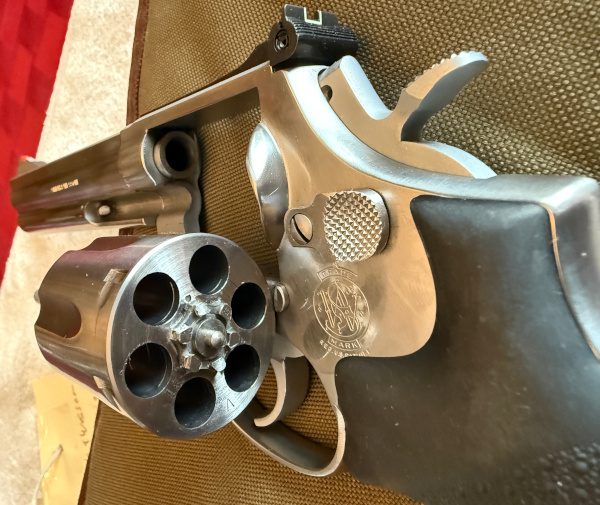
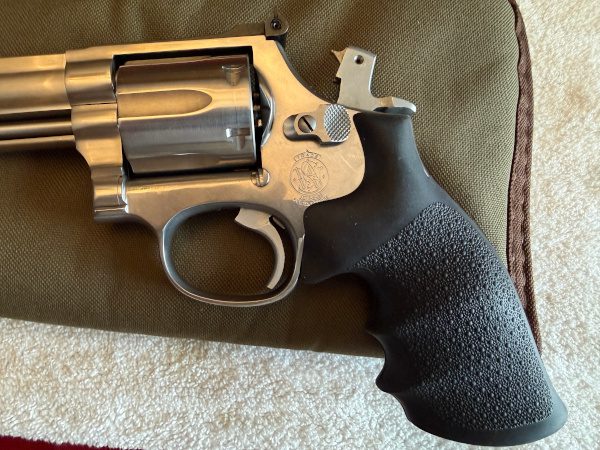
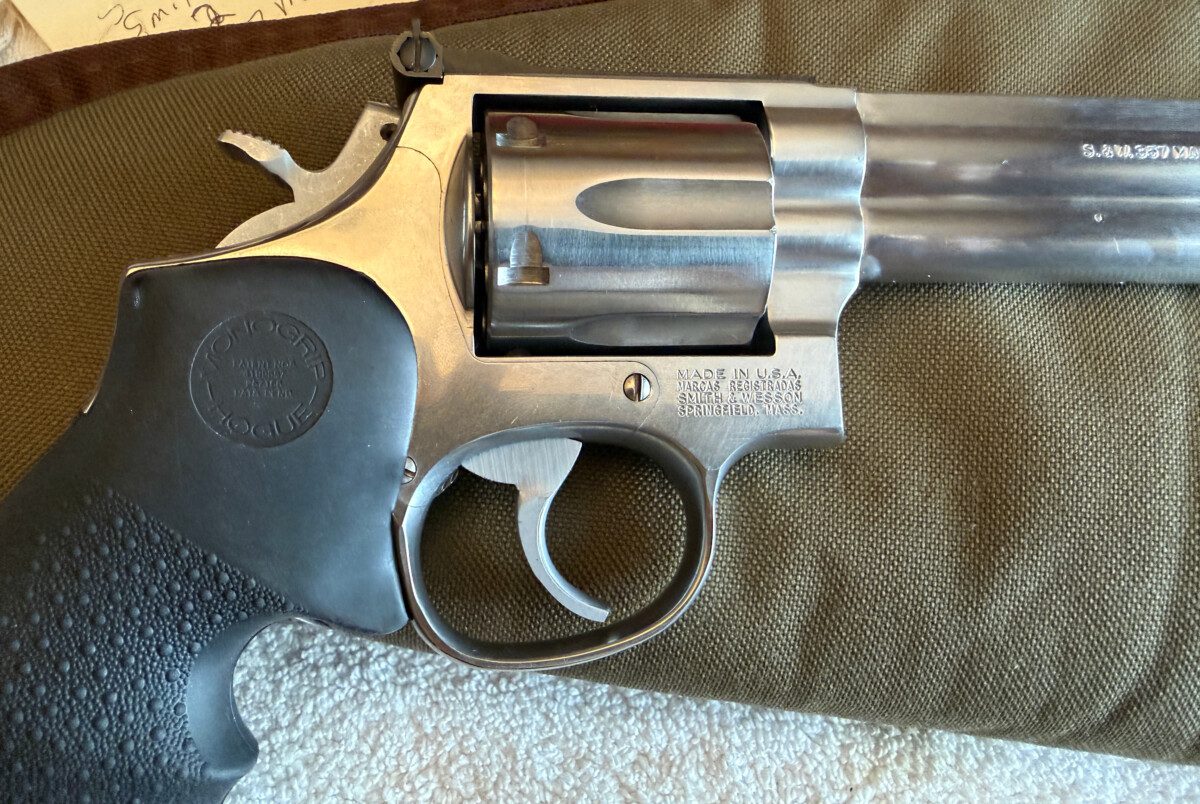
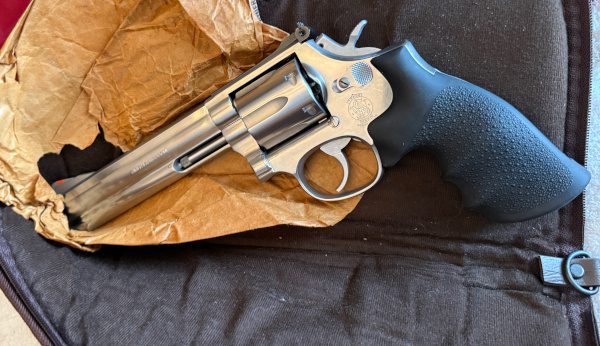
This revolver is in great shape, barrel is crisp and clean, very few light surface scratches. Looks amazing. Comes with a soft case.